Electrician Hourly Rate: What to Charge Per Job in 2026
How electricians should price hourly work versus flat-rate jobs in 2026, with real labor rates, panel upgrade pricing, and a worked example.
Electrical work is unusual among the trades because most electricians quietly run two pricing systems at once: an hourly rate for diagnostic and service work, and flat-rate pricing for common jobs like outlet installs or panel upgrades. Homeowners rarely see the hourly rate at all. They see “$250 to install this outlet,” and the hourly math happens behind the scenes to make sure that number actually covers your time.
In 2026, residential electricians typically charge $50-100 an hour, commercial work runs $75-150, and specialists in solar or EV charging can command $100-200. But the hourly number is really a planning tool. The flat-rate job price is what actually gets quoted, and getting that translation right is where a lot of the money in this trade either shows up or disappears.
Why flat-rate pricing wins for common jobs
Quoting “$85 an hour, plus materials, we’ll see how long it takes” is honest, but it makes homeowners nervous. Nobody wants an open-ended number for a job they assume should be predictable. A standard outlet install, a ceiling fan, a GFCI swap: these are jobs you’ve done hundreds of times, and the variance between one and the next is small enough that flat pricing works well for both sides.
Here’s where common jobs land in 2026:
A standard outlet runs $150-300 installed. A GFCI outlet, required in kitchens, bathrooms, and outdoor locations, runs $200-400. A 240V outlet for a dryer or range runs $300-600, since it usually involves a dedicated circuit back to the panel. A light switch runs $100-200.
Lighting work follows a similar pattern: a ceiling fan install runs $150-350, a recessed light runs $150-250 per can (with volume discounts common past six cans), and a hardwired smoke detector runs $100-200. A dedicated circuit for an appliance runs $200-500 depending on distance from the panel.
The reason these numbers work as flat rates is that you’ve built the hourly cost, materials, and a buffer for the occasional surprise into a single number based on doing the job enough times to know the real distribution of outcomes.
Where hourly pricing still makes sense
Diagnostic work is the clearest case. If someone calls because half their kitchen lost power and you don’t know why yet, you can’t flat-rate a mystery. This is where the service call fee comes in: $75-150 for a standard call covering the first 30-60 minutes, $150-300 for after-hours emergencies, and $200-400 for weekends or holidays. Most electricians apply that fee toward the job if the customer moves forward, which keeps it from feeling like a penalty while still compensating you for time spent on calls that don’t convert.
New construction and whole-house work also tends to price hourly or per square foot rather than as a flat job total, simply because the scope is too large and too variable to reduce to a single number the way a single outlet install can be.
Panel work and larger jobs
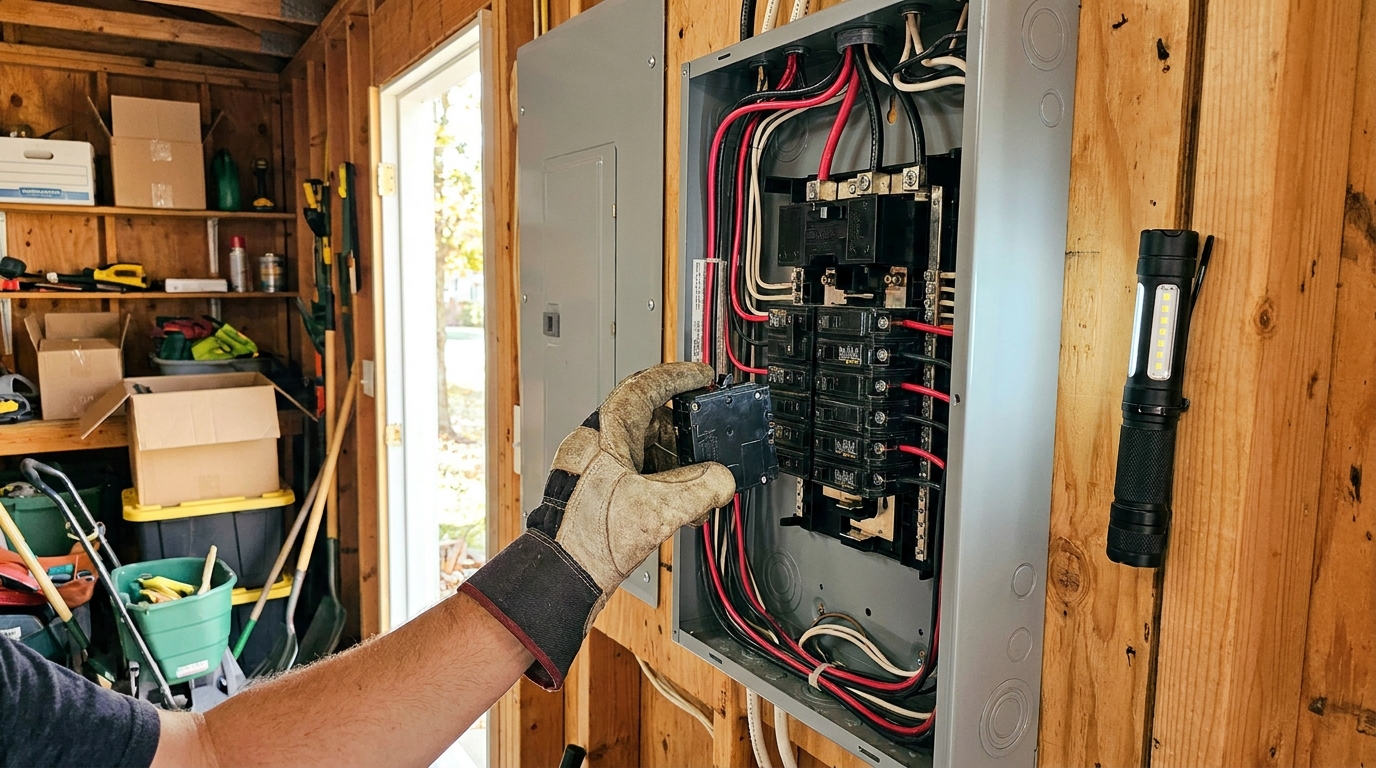
Panel upgrades sit in their own category because the dollar amounts are large enough that homeowners expect, and deserve, a detailed breakdown rather than a round number.
A 100-amp to 200-amp upgrade runs $1,800-3,500 and typically takes 6-10 hours. A 200-amp to 400-amp upgrade runs $4,000-8,000 over one to two days. A 100-amp subpanel install runs $1,200-2,500. A straightforward breaker replacement runs $150-300. A whole-house surge protector runs $300-600.
Permits matter more here than almost anywhere else in residential electrical work. Panel work requires permits and inspection in virtually every jurisdiction, typically adding $100-500 to the job. Leaving that out of a quote is one of the fastest ways to have an awkward conversation with a homeowner later, when the final invoice doesn’t match what they expected.
EV chargers deserve a specific mention, since demand for them has grown steadily and pricing reflects that. A Level 2 charger install runs $500-2,000 for the electrical work alone, with distance from the panel being the biggest variable. Generator transfer switches run $500-1,500 for a manual switch, more for automatic. Whole-home generator electrical work (not the generator itself) runs $3,000-6,000.
A worked example: panel upgrade
Say you’re quoting a 100-amp to 200-amp panel upgrade for a homeowner whose panel is original to a 1990s build and can’t support the AC unit and EV charger they want to add.
Base labor: 8 hours at your journeyman rate of $65/hour comes to $520.
Materials: a 200-amp panel, breakers, and associated hardware typically run $600-900 depending on brand and breaker count. Call it $750.
Permit and inspection: $300, which varies significantly by city but is worth quoting as its own line so the homeowner understands it’s a pass-through cost, not markup.
Direct costs land around $1,570. At a healthy markup for this kind of specialized work (many electricians run higher markup on panel work given the liability and code complexity involved), say 40%, the total comes to roughly $2,200, comfortably inside the standard $1,800-3,500 range.
Breaking the quote into labor, materials, and permit costs also gives the homeowner something concrete to ask questions about, which builds more trust than a single lump sum for a job this size.
Where electricians underprice their work
Quoting service calls too low, or waiving the fee too easily to win the job. That fee exists because diagnostic time is real time, and giving it away regularly adds up over a year of calls that don’t convert.
Forgetting permit costs on panel work. These are pass-through costs, but if they’re not in the quote, they come out of your margin instead of the homeowner’s pocket.
Underestimating distance-related costs on EV chargers and dedicated circuits. A charger 10 feet from the panel and one 60 feet from the panel are very different jobs, even though the end result looks the same to the homeowner.
Treating every job as flat-rate. Complex troubleshooting, especially in older homes with undocumented wiring, doesn’t fit a flat number. Forcing it into one usually means eating hours you didn’t plan for.
Not accounting for drywall or finish repair on jobs that require opening walls for new circuits or rewiring. That’s often a separate trade or a separate line item, and it’s easy to forget when you’re focused on the electrical scope.
FAQ
What is the average hourly rate for an electrician?
Residential electricians typically charge $50-100 an hour, commercial electricians charge $75-150, and specialists in solar or EV charging can charge $100-200. Rates vary by region and license level.
How much does it cost to install an electrical outlet?
A standard outlet runs $150-300 installed. GFCI outlets run $200-400, and 240V outlets for dryers or ranges run $300-600, largely depending on distance from the panel and whether drywall repair is needed.
How much does a 200 amp panel upgrade cost?
A 100-amp to 200-amp panel upgrade typically runs $1,800-3,500 for materials and labor, plus $100-500 in permit and inspection fees required in nearly every jurisdiction.
What should electricians charge for a service call?
Most electricians charge $75-150 for a standard call covering the first 30-60 minutes, $150-300 for after-hours emergencies, and $200-400 for weekends or holidays. Many apply the fee toward the job if the customer proceeds.
Should I quote flat-rate or hourly for a job?
Flat-rate works well for jobs you’ve done many times with predictable scope, like outlet installs or fixture swaps. Hourly or a service-call-plus-diagnosis model works better for troubleshooting and anything where the actual scope isn’t clear until you’re onsite.
The short version
Use your hourly rate to build flat prices for the jobs you do repeatedly, and keep hourly or diagnostic pricing for the work that genuinely can’t be scoped in advance. Break large jobs like panel upgrades into labor, materials, and permits so the homeowner can see where the number comes from, and price distance and complexity separately from the base job whenever they add real time.
SnapScope turns job site photos into a priced estimate with labor, materials, and your markup built in, so you can send a homeowner a real number before you’ve left the driveway.

SnapScope AI - Cost Estimator
Snap photos. Get instant estimates.
 Download SnapScope
 Or search "SnapScope AI" in the App Store
For the full rate table across panel work, EV chargers, and new construction, see the electrician pricing guide.